Read an article by Board Certified Healthcare Lawyer Karen Davila on mandatory vaccination policies in healthcare businesses.
Continue reading
Read an article by Board Certified Healthcare Lawyer Karen Davila on mandatory vaccination policies in healthcare businesses.
Continue reading
 By: Susan St. John
The trend that we are seeing affects both buyers and sellers in the health care sector with respect to entities that have received cash infusions from the Paycheck Protection Program (“PPP”) created pursuant to the CARES Act in response to COVID-19. Mergers and acquisitions can come to a significant slowdown, standstill or be terminated altogether if careful planning is not performed to account for the impact the PPP funds received by a healthcare target or seller will have on an anticipated merger or acquisition. While tax and legal considerations have typically followed along with the merger or acquisition and these considerations are important aspects of any merger or acquisition, they have taken a forefront position when it comes to planning for a change of ownership when the healthcare target or seller has received PPP funds.
As we learned earlier, health care entities requested and received PPP funds to sustain them during the public health emergency caused by COVID-19, allowing them to avoid a virtual economic shut-down. These funds were a welcome relief to keep health care entities afloat financially, providing a way to cover certain expenses such as a) payroll costs, b) rent, c) interest on any covered mortgage obligation (which shall not include any prepayment of or payment of principal on a covered mortgage obligation), and d) utilities. Using the PPP funds on these expenses allows for a recipient of the PPP funds to qualify for loan forgiveness under the PPP. That all seemed like welcome relief at the time.Continue reading
Dean Viskovich joins the Florida Healthcare Law Firm as healthcare attorney specializing in laboratories.
Continue reading
 Three family members involved in owning an addiction treatment center and/or a toxicology lab were charged in July with patient brokering and money laundering in an alleged scheme involving roughly $2 Million. The allegations arise out of a complex corporate enterprise involving at least four companies and some common ownership between the treatment center and lab. While it’s premature to assume that the defendants did anything illegal, there are some interesting things in this case:
Complexity Invites Suspicion. Every business owner in the addiction treatment and toxicology lab space knows three things: (1) it’s extremely regulated, (2) law enforcement has an especially sharpened focus on these industries, and (3) insurance companies are very suspect of any situation involving either industry, especially when there is any common ownership. So why then would one construct an enterprise that even “looks” complex or tricky? It intensifies suspicion in an already highly scrutinized business space. This is clearly one of the points of focus in this case. There’s an old saying woven into the mind of every experienced healthcare lawyer: if something can’t be done directly, it can’t be done indirectly. Time will tell if anything in this case was wrong or if there are any good reasons for the corporate structure, but the complexity of the corporate structure certainly invites suspicion. Continue reading

 By: Chase Howard
Thinking About Selling Your Practice? Preparation is key and the difference between a successful sale and seller’s regret.
Step 1: Call Your Financial Planner
Step 2: Visit Your Accountant

 By: Steven Boyne
As employers begin to consider opening their offices and bringing back their employees and inviting other people into their offices, such as patients, there are many issues that should be considered and planned for BEFORE the front door is opened.
Quick Legal Advice – COVID-19 is new to everyone, including Government regulators and plaintiff lawyers, so we are all learning as we go along. The best legal advice in these uncertain times is:
OPENING YOUR DOOR TO YOUR EMPLOYEES
As an employer you have a responsibility to provide a safe working environment, and as of today it is clear that the following is a minimal list of considerations:Continue reading

 By: Steven Boyne
COVID-19 has devastated the US economy, including many parts of our Healthcare sector. The Federal Government, along with most States, have begun to respond with various financial incentives, ranging from straight out grants to loans, and everything in between. The following is an overview of some of the assistance that is currently available for the Healthcare community, along with some tips that may assist your company in applying, and what you need to do if you are lucky enough to receive some money:
The CARES Act
TIPS:

 By: Susan St. John
Earlier today, Governor DeSantis issued Executive Order 20-144 extending the State of Emergency declare in Executive Order 20-52 for another 60 days. Pursuant to the extension of Executive Order 20-52, the State Surgeon General’s Order 20-003 is also extended another 60 days as its expiration is tied to the expiration of Executive Order 20-52. Thus, telehealth providers from other states with valid and unencumbered licenses may continue to provide telehealth services to persons in Florida without registering with the Department of Health. Telehealth services must still be provided using two-way audio and video communications. Audio-only telephone calls are not permitted under Florida’s existing telehealth statute and have not been waived or suspended via the State Surgeon General’s Orders.Continue reading

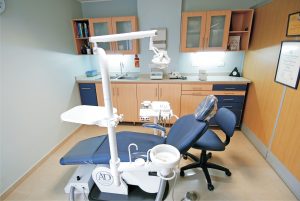
 Florida Healthcare Law Firm is offering advisement by way of webinars to dentists and dental professionals during the Covid-19 pandemic. The firm, which offers legal assistance to medical professionals and businesses, is working in the dental law field and assisting professionals who are currently not working due to the coronavirus so that they can continue to provide assistance to their patients. With education top of mind for the firm, the telehealth and teledentistry campaign is to inform dental professionals on how to directly stay in contact with patients and offer services via audiovisual telecommunications.
“The coronavirus has hit our country hard and most small businesses. Dentistry is at the top of the list and even though dental law is one of our top fields, we wanted to make sure that we adapted to the times and offered a reliable service to our clients and those in the field impacted by this pandemic. Technology allows doctors to connect with patients from anywhere in the world and knowing that you can reach a medical professional who you’ve trusted for years is important, especially right now.” Florida Healthcare Law Firm Representative. “Although dental services have been deemed “non-essential business,” we know how important dental health is. Patients will still have dental questions or concerns during the office shut-downs.”
Because telemedicine is not a service usually offered by dentist offices, many doctors and business owners are finding it difficult to adjust and offer remote service. The law firm has stepped in and is offering free information webinars and other forms of digital content which can provide clarity and guidance for these small businesses so that they can stay open and provide care for their patients. With a limitation elective services, as well as many in the public not wanting to leave their homes right now, telehealth provides a bridge where patients can still get reliable care and advisement from someone they trust.Continue reading

 By: Susan St. John
The newest relief for small business and health care providers was passed by the Senate on April 21st, by the House on April 23rd, and became law on April 24, 2020. This new Act, provides for $484 billion in additional relief to small businesses and healthcare providers. $100 billion of the relief has been allocated to the Department of Health and Human Services and of that amount $75 billion is earmarked “to reimburse health care providers for health related expenses or lost revenues that are attributable to the coronavirus outbreak.” The remaining $25 billion will be used for expenses to research, develop, validate, manufacture, purchase, administer, and expand capacity for COVID-19 test to effectively monitor and suppress COVID-19.
The $75 billion provided under the Act will remain available until expended and will be used to prevent, prepare for, and respond to coronavirus to reimburse necessary expense or lost revenues incurred as a result of COVID-19. However, if a health care provider has already had expenses or lost revenues incurred due to COVID-19 reimbursed from other sources or that other sources are obligated to reimburse (like the CARES Act), any funds received from the $75 billion cannot be used as a “double dip” by that health care provider.
A big difference for health care providers with this Act, is that unlike the CARES Act that provided a direct deposit to health care providers based on Medicare fee for services reimbursement, no application necessary, this Act requires the health care provider to apply for relief funds. Eligible health care providers include public entities, Medicare or Medicaid enrolled suppliers and providers, profit and not-for-profit entities that provide diagnoses, testing, or care for individuals with possible or actual cases of COVID-19 (so as to accommodate the “lost revenues” provision, this could mean any patient treated since January 31, 2020, and is not necessarily limited to patients treated for COVID-19 symptoms without testing confirmation). Health care providers should act quickly and apply for funds as soon as possible as the HHS Secretary will review applications and make payments on a rolling basis. Payment may be a pre-payment, prospective payment, or a retrospective payment as determined by the HHS Secretary. Health care providers must submit an application that includes statements justifying the need of the provider for the payment. The provider must have a valid tax id number (could be an individually enrolled physician). As with the CARES Act, HHS will have the ability to audit how relief funds are expended and must start reporting obligations of funds to the House and Senates Committees on Appropriations within 60 days from the date of enactment of this Act. Reporting will continue every 60 days thereafter.Continue reading